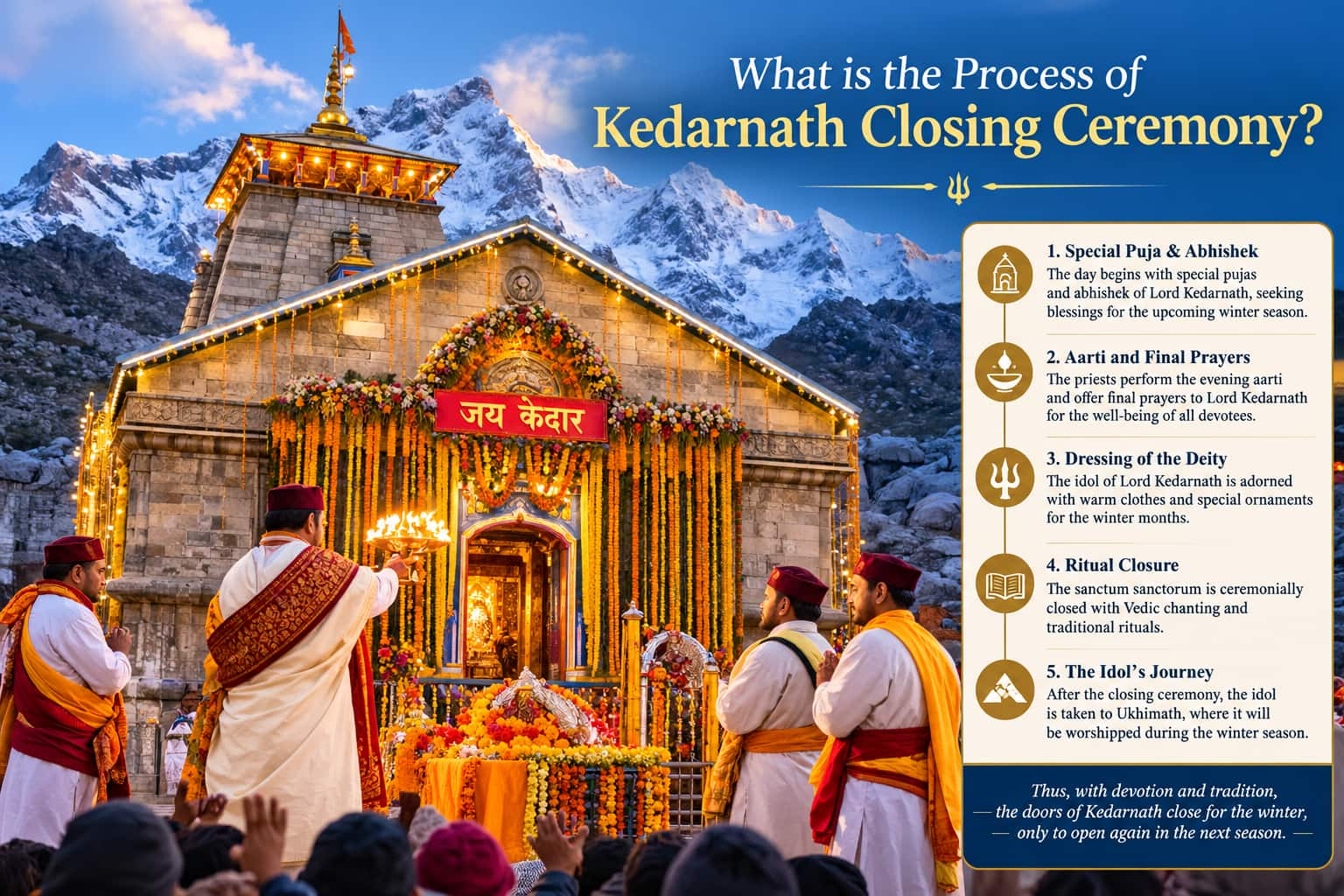
What is the process of Kedarnath closing ceremony?
The Kedarnath closing ceremony is one of the most important religious events in Uttarakhand. Every year, thousands of devotees visit Kedarnath Dham to seek the blessings of Lord Shiva before the temple closes for the winter season. The ceremony includes special pujas, Vedic chanting, the closing of the temple doors, and the ceremonial departure of Lord Kedarnath's Panchmukhi idol to its winter home.
Kedarnath Temple is located in the Garhwal Himalayas of Uttarakhand and is one of the twelve Jyotirlingas of Lord Shiva. Due to heavy snowfall and extreme winter conditions, the temple generally closes in October or November and reopens in April or May. The exact dates are announced according to traditional Hindu calculations.
If you are planning to visit Kedarnath during the closing ceremony, this guide explains the complete process, religious significance, winter worship arrangements, and travel tips.
What Is the Kedarnath Closing Ceremony?
The Kedarnath closing ceremony, also known as the Kedarnath Dham Kapat Closing Ceremony, marks the end of the annual pilgrimage season. The word kapat means temple doors or gates.
During this ceremony, priests perform special religious rituals before the main temple doors are closed for winter. The Panchmukhi idol of Lord Kedarnath is then carried in a traditional palanquin, known as a doli, to Omkareshwar Temple in Ukhimath.
Although the main Kedarnath Temple remains closed during winter, devotees can worship Lord Kedarnath at Omkareshwar Temple. This arrangement allows the religious traditions and daily worship to continue throughout the winter months.
When Does Kedarnath Temple Close in 2026?
The Kedarnath Temple closing date changes every year and is announced according to the Hindu calendar and religious traditions.
The temple usually closes around the time of Bhai Dooj, shortly after Diwali. However, devotees should check the official announcement before making travel arrangements.
For the latest information, visit the official Shri Badrinath-Kedarnath Temple Committee website or the Uttarakhand Tourist Care portal.
Important: Do not assume that the closing date or ceremony timings from a previous year will remain the same in 2026. Confirm the official schedule before planning your visit.
Step-by-Step Process of the Kedarnath Closing Ceremony
The Kedarnath closing ceremony follows traditional religious practices. The schedule may vary slightly from year to year, but the main rituals generally follow the sequence below.
1. Special Puja Begins Early in the Morning
The closing ceremony usually starts early in the morning with special prayers and religious rituals inside the temple.
Priests perform puja to Lord Kedarnath and offer prayers for the well-being and prosperity of devotees. Vedic mantras are chanted, and the atmosphere becomes deeply spiritual as pilgrims gather to witness the final day of the season.
The rituals are conducted according to established temple traditions under the supervision of the temple authorities.
2. Samadhi Puja Is Performed
One of the significant rituals associated with the closing ceremony is the Samadhi Puja.
During this ritual, priests perform special worship of the sacred Shiva lingam in the temple's sanctum. The ceremony marks the conclusion of the regular worship season at the main shrine.
Devotees consider this an important moment because it precedes the closure of the temple for the harsh Himalayan winter.
The exact procedure and timing are determined by the temple's religious authorities.
3. The Sanctum Is Prepared for Winter
After the special puja, the temple priests complete the prescribed rituals for the winter closure.
The sanctum sanctorum is prepared according to the temple's traditional practices. Religious arrangements are completed before the temple doors are finally closed.
This is a significant part of the ceremony because it marks the end of worship at the main shrine until the next pilgrimage season.
4. The Panchmukhi Idol of Lord Kedarnath Is Brought Out
After the prescribed rituals, the Panchmukhi idol of Lord Kedarnath is brought out of the temple in a ceremonial palanquin.
Panchmukhi means five-faced. The sacred idol represents Lord Kedarnath and is carried in a decorated doli by designated bearers.
Devotees gather to witness the procession and seek blessings. Traditional devotional songs, religious chants, and the sounds of temple instruments add to the spiritual atmosphere.
This procession is among the most memorable moments of the Kedarnath closing ceremony.
5. The Temple Doors Are Closed
After the final rituals and the prescribed ceremonial proceedings, the main doors of Kedarnath Temple are closed for the winter season.
The closing is carried out at an auspicious time announced by the temple authorities.
The event attracts pilgrims, priests, local residents, and officials. Many devotees consider it a deeply emotional occasion because it marks the end of their opportunity to visit the main shrine until it reopens the following year.
Once the doors are closed, regular pilgrim darshan at the main temple stops for the winter period.
6. The Doli Begins Its Journey Towards Ukhimath
After the closing ceremony, the Panchmukhi idol of Lord Kedarnath begins its traditional journey to the winter seat at Omkareshwar Temple in Ukhimath.
The doli procession travels through designated locations in the region. Depending on the announced schedule, it may halt at places such as Rampur or Guptkashi before reaching Ukhimath.
Devotees and local communities welcome the procession along the route. The journey is an important religious tradition and symbolises the seasonal transfer of the deity's worship from Kedarnath to its winter home.
The route, halts, and arrival timings should be confirmed from the official annual programme.
7. The Idol Reaches Omkareshwar Temple in Ukhimath
The journey concludes at Omkareshwar Temple in Ukhimath, located in Uttarakhand's Rudraprayag district.
Omkareshwar Temple serves as the winter seat of Lord Kedarnath. After the idol arrives, the prescribed installation and worship rituals are performed.
For the winter months, devotees can visit Omkareshwar Temple to offer prayers and seek the blessings of Baba Kedar.
This is one of the most important aspects of the closing ceremony: while the main Kedarnath shrine remains inaccessible for regular worship, the deity's winter worship continues at Ukhimath.
Why Does Kedarnath Temple Close During Winter?
Kedarnath Temple is situated at an altitude of approximately 3,580 metres above sea level in the Himalayan region. Winters bring heavy snowfall, freezing temperatures, and difficult trekking conditions.
The route to Kedarnath can become unsafe because of snow, ice, and harsh weather. Facilities and access may also be restricted during this period.
The temple's seasonal closure therefore reflects both the area's challenging climate and its established religious traditions.
The closure does not mean that worship of Lord Kedarnath stops completely. Instead, the traditional winter worship arrangements continue at Omkareshwar Temple in Ukhimath.
Where Can You Have Kedarnath Darshan During Winter?
Devotees who cannot visit Kedarnath during the pilgrimage season can visit Omkareshwar Temple in Ukhimath during the winter months.
The temple becomes the principal winter worship location for Lord Kedarnath. Religious ceremonies and prayers are conducted there according to the established traditions.
Before travelling, check local weather conditions, road accessibility, temple timings, and any official travel advisories.
Winter travel in the Himalayan region requires extra preparation, especially for elderly pilgrims, families with children, and people unfamiliar with mountain roads.
Can Devotees Attend the Kedarnath Closing Ceremony?
Yes, devotees may attend the closing ceremony when access is permitted and the temple authorities allow pilgrims to participate in the event.
However, the ceremony attracts large crowds, and access to specific areas may be restricted for safety and ritual reasons.
If you want to witness the ceremony, follow these travel tips:
- Check the official date: Confirm the announced closing date and ceremony schedule before booking.
- Complete registration: Follow the applicable Uttarakhand Char Dham Yatra registration requirements.
- Arrive early: Reach the area well in advance, as crowds can increase significantly.
- Carry warm clothing: Temperatures can be very low, especially in the early morning.
- Check weather updates: Snowfall, rain, and road conditions may affect your journey.
- Book accommodation in advance: Hotels and guesthouses in nearby locations may experience higher demand.
- Follow local instructions: Respect police, administration, and temple committee guidelines.
Avoid relying only on social media posts for ceremony timings or route updates. Official announcements are the safest source of information.
Religious Significance of the Kedarnath Closing Ceremony
The Kedarnath closing ceremony represents continuity of faith, devotion, and centuries-old Himalayan traditions.
For devotees, the departure of the Panchmukhi idol is not simply a seasonal procession. It marks the transition from worship at the high-altitude shrine to worship at its winter seat in Ukhimath.
The event also reflects the close relationship between the local communities, temple priests, and the religious heritage of Uttarakhand.
Many pilgrims consider witnessing the ceremony a spiritually meaningful experience. The chants, traditional procession, and final moments before the temple closes make the occasion especially memorable.
Difference Between Kedarnath Temple Closing and Opening Ceremonies
The closing and opening ceremonies mark two different stages of the annual pilgrimage cycle.
| Feature | Closing Ceremony | Opening Ceremony |
|---|---|---|
| Usual season | October or November | April or May |
| Main purpose | Close the shrine for winter | Reopen the shrine for pilgrims |
| Important ritual | Final puja and closure of temple doors | Special puja before the doors open |
| Deity's location | Panchmukhi idol departs for Ukhimath | Panchmukhi idol returns to Kedarnath |
| Winter worship | Omkareshwar Temple, Ukhimath | Worship resumes at Kedarnath |
Both ceremonies follow traditional religious customs, and their exact dates are announced annually.
Frequently Asked Questions About the Kedarnath Closing Ceremony
1. What happens during the Kedarnath closing ceremony?
Special pujas and Vedic chants are performed, the prescribed closing rituals are completed, and the temple doors are closed for winter. The Panchmukhi idol of Lord Kedarnath then begins its ceremonial journey to Omkareshwar Temple in Ukhimath.
2. When does Kedarnath Temple close every year?
Kedarnath Temple generally closes in October or November, often around Bhai Dooj after Diwali. The exact date and time change every year according to traditional Hindu calculations.
3. Where does Lord Kedarnath stay during winter?
The Panchmukhi idol of Lord Kedarnath is taken to Omkareshwar Temple in Ukhimath, which serves as the deity's winter seat.
4. Can we visit Kedarnath after the closing ceremony?
Regular pilgrim darshan at the main Kedarnath Temple is not available after the winter closure. Access to the surrounding high-altitude area may also be restricted or unsafe. Devotees can visit Omkareshwar Temple in Ukhimath for winter worship.
5. Is the Kedarnath closing ceremony open to everyone?
Devotees can generally attend subject to access permissions, crowd management, weather conditions, and official arrangements. Restrictions may apply during specific rituals.
6. Does the Kedarnath closing ceremony take place on Bhai Dooj?
The temple often closes around Bhai Dooj, but the exact date is announced annually. Pilgrims should check the official schedule instead of assuming the date in advance.
7. How can I check the official Kedarnath closing date?
Visit the Shri Badrinath-Kedarnath Temple Committee website or the Uttarakhand Tourist Care portal for official updates on temple dates, registration, and pilgrimage information.
The Kedarnath closing ceremony is a sacred annual tradition that marks the end of the pilgrimage season at the high-altitude shrine of Lord Shiva. From the early-morning puja and final rituals to the closure of the temple doors and the Panchmukhi doli procession, every stage carries religious and cultural significance.
The journey of Lord Kedarnath's idol to Omkareshwar Temple in Ukhimath ensures that devotees can continue their winter worship even when the main shrine remains closed.
If you are planning to witness the Kedarnath closing ceremony, confirm the official date, prepare for cold weather, and follow the latest travel advisories. With proper planning, you can experience one of Uttarakhand's most meaningful spiritual traditions.